
UNESCO designation fuels expanded arts infrastructure, enhanced historical exhibits, and fresh cultural amenities for residents and visitors
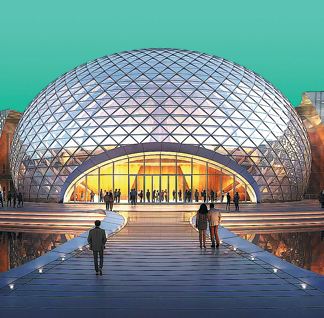
A rendering of the Wuxi Symphony Hall. CHINA DAILY
On Nov 15, a ceremony was held in Wuxi to confer on it the title of UNESCO City of Music, the first such designation within the UNESCO Creative Cities Network in China. In response to the demand for hosting large-scale music events and performances, the Wuxi Symphony Hall has just been constructed.
The hall, located in the Wuxi National Hi-Tech District, is a new cultural landmark of Wuxi, East China's Jiangsu province. On Jan 1,2026, the hall will host a New Year concert featuring the Wuxi Symphony Orchestra and the Wuxi Symphony Youth Orchestra. The concert will comprise a variety of performances such as symphonic music, an orchestral version of a Xiju Opera show, and also piano, violin and vocal performances.
The concert will be conducted by Lin Daye, art director at the Wuxi Symphony Orchestra, and will open with Wuxi Overture, a symphonic work created for Wuxi by the orchestra's music director Li Shaosheng.
The symphony hall is a testament to the Wuxi high-tech district's recent emphasis on cultural development.
When people think of a high-tech zone, they may first consider economic development. While the Wuxi high-tech district may have been viewed as a "steel hero" supported by strong industrial capabilities, it is now highlighting rich and profound cultural resources in addition to economic growth and technological innovation.
The Wuxi Symphony Hall project covers an area of about 6.67 hectares and is located beside the Feicui River. The project features three halls and two centers. The main hall offers 1,500 seats, whereas the multifunctional hall can hold up to 400 to 500 people and the rehearsal hall covers an area of about 400 square meters. The two centers consist of an arts exchange center and a performing arts commercial center.
The project aims to create a comprehensive experience space and a 24/7 high-quality international area based on the artistic and cultural advantages of classical music.
The Wuxi Symphony Hall is not only a major public cultural project for Wuxi but also gathers international top-tier experts in architecture, structure and acoustics to create world-class sound quality and performance effects, insiders said. The hall plans to serve Wuxi and extend its influence across the Yangtze River Delta region, becoming a new cultural innovation engine, vitality center and international symbol for Wuxi.
Ancient culture
The interplay of modern and historical culture is another feature and highlight of cultural development in the Wuxi high-tech district. As a key cradle of Wu culture, the district's 3,000-year history and three decades of new area development have together driven remarkable achievements.
After nearly a year of renovation and upgrade, the Hongshan Ruins Museum reopened on May 17, the day before International Museum Day. The museum, located in Hongshan subdistrict of the city's high-tech district, was built on the original site of the Qiuchengdun, a large-scale aristocratic tomb of the Yue state, and within the Hongshan National Archaeological Site Park.
In 2004, the Hongshan Yue state aristocratic tombs were selected as one of the national top 10 archaeological discoveries; in 2010, the park became one of the first national archaeological site parks; and in 2020, the museum was rated as a national second-class museum.
The Hongshan Ruins, covering about 7.5 square kilometers, is a significant witness to the Wu and Yue civilizations in the lower reaches of the Yangtze River during the Spring and Autumn (770-476 BC) and Warring States (475-221 BC) periods.
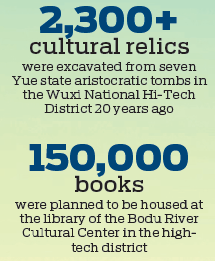
Twenty years ago, excavations of seven Yue state aristocratic tombs, including Qiuchengdun, revealed more than 2,300 cultural relics, including sets of celadon ritual vessels, musical instruments, and exquisitely carved jade artifacts.
The renovated museum exhibition space consists of four parts. The north hall comprehensively introduces the Hongshan Ruins and its related archaeological achievements and covers the Hongshan tomb group, the Qiuchengdun site and the Wujiabang site.
The south hall focuses on the celadon and pottery unearthed from the Hongshan Yue state aristocratic tombs, exploring the material and processing techniques. There is also a Qiuchengdun original site exhibition hall and a temporary display hall in the museum.
The upgraded museum adopts an "immersive plus display" dynamic and static combined display mode, retaining the solemnity and rigor of traditional exhibitions while using innovative technology to bring cultural relics to life.
It integrates a variety of digital technologies such as naked-eye 3D, augmented reality, electronic sand tables, holographic projection, air imaging, 3D mapping projection, cultural relic interactive screens and digital humans.
According to a man surnamed Liu, who visited the museum with his child, the diverse exhibition forms make history intuitive; not only do children learn knowledge, but even adults find it fresh and feel the charm of historical culture.
Industry insiders said that the upgraded Hongshan Ruins Museum has achieved a transition from traditional museums centered on "objects" to contemporary museums centered on "people".
It has replaced the previous single-cabinet display mode with large display cabinets each spanning 20-30 meters long, combined with interesting interactive projects, allowing people to feel closer to cultural relics and learn about historical culture and archaeological knowledge.
Multifunctional centers
Also focusing on people, to meet local residents' and tourists' needs for public culture and fitness, the Wuxi high-tech district has launched the Bodu River Cultural Center and the Bodu River Sports Center. The cultural center, which officially opened on June 28, is a new cultural landmark and a major project for public well-being in the Wuxi high-tech district.
The cultural center is located on the bank of Bodu River, with a total construction area of about 23,700 sq m. Its design centers on the dynamic form of a flying phoenix, lighting up the city's cultural skyline with its striking facade design, according to the district.
The Bodu River Cultural Center is not isolated but deeply integrated with the waterfront landscape, with the building's outline blending with the surrounding natural environment and complementing the water system and greenery of Bodu River.
The cultural center consists of three structures: the three-floor cultural hall in the north showcases aesthetic education and art; the south structure is the library area, also with three floors; the western structure has two floors, with the first floor as a national geographic exhibition hall and the second floor as a small theater.
Looking up in the atrium of the cultural hall, visitors can see a ribbon-shaped screen. The naked-eye 3D images use water as the narrative core, metaphorically representing the 3,000-year civilization of Bodu River flowing endlessly.
Its multifunctional hall, covering more than 500 sq m, offers an open space that can be used for small art lectures, interactive activities and art markets. The multifunctional hall also features interactive digital devices embedded in the walls, with an LCD infrared touch long screen that allows interaction with a touch.
There are nine activity rooms in the cultural hall, with dynamic rooms on the first floor, including rooms for dance, opera, vocal music and musical instruments. The second floor features static activity rooms, primarily for intangible cultural heritage activities, calligraphy, fine art and literary creation.
The third floor of the cultural hall planned to focus on art and calligraphy exhibitions, aiming to become an exhibition space with unique cultural charm and artistic value.
The library covers a total area of 4,300 sq m and is designed to house a collection of 150,000 books with about 400 seats available. The library features a high-ceiling space, natural lighting, and an intelligent ventilation system.
At the entrance on the first floor, besides various intelligent equipment, there is a digital assistant providing warm services to ensure a smoother reading journey. The first floor also includes a social sciences book-lending area, a young children's reading area, and a reading area for the visually impaired, hoping to meet reading needs of different groups.
The entire south wall of the library's third floor, which is accessible directly via outdoor steps, is made of floor-to-ceiling glass. Sitting by the window, visitors can enjoy expansive views, taking in the lush trees and waves of Bodu River Park.
The theater in the cultural center's west covers an area of more than 600 sq m. It features a modular stage and retractable seating, accommodating up to 380 people, and is designed to host a variety of performances such as stand-up comedy, small plays, lectures, and fashion shows.
The Bodu River Sports Center project, which was completed in late 2024, is located on the north side of Bodu River. Covering an area of about 10,900 sq m, the center includes facilities such as a swimming pool, basketball court, table tennis hall, badminton hall, climbing gym, squash court, and fitness center, making it a key sports venue developed by the Wuxi high-tech district to serve the public.
Its architectural outline was designed based on boats traveling across the water, with inspiration drawing from the eaves of ancient buildings. The facade features glass curtain walls, stone materials, and aluminum panels, harmonizing with the waterscape of Bodu River to create an impressive visual effect.
Currently, a leisure path extending several kilometers has been formed along Bodu River. The sports center, along with the surrounding cultural center, sports park, and cultural park, is among important cultural and sports venues along the Bodu River landscape belt.
Historically, Bodu River, which runs through the city, played a crucial role in the economic development of Jiangnan and the strengthening of the Wu region through its water-related projects. Many years later, the river still flows, and the culture it carries — now expressed through a new form of humanistic urban development — continues to bring vitality to the Wuxi high-tech district.
 Copyright © China Daily. All rights reserved.